
Caen Hill Locks - Devizeson the Kennet and Avon Canal
 The Locks, Bath Rd, Devizes SN10 1QR
The Locks, Bath Rd, Devizes SN10 1QR
The Locks, Bath Rd, Devizes SN10 1QR
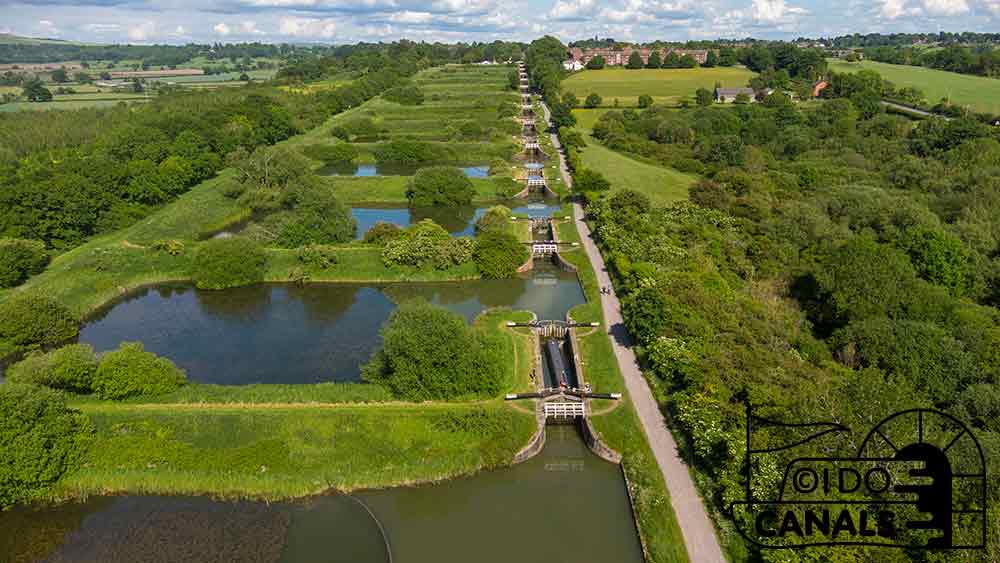
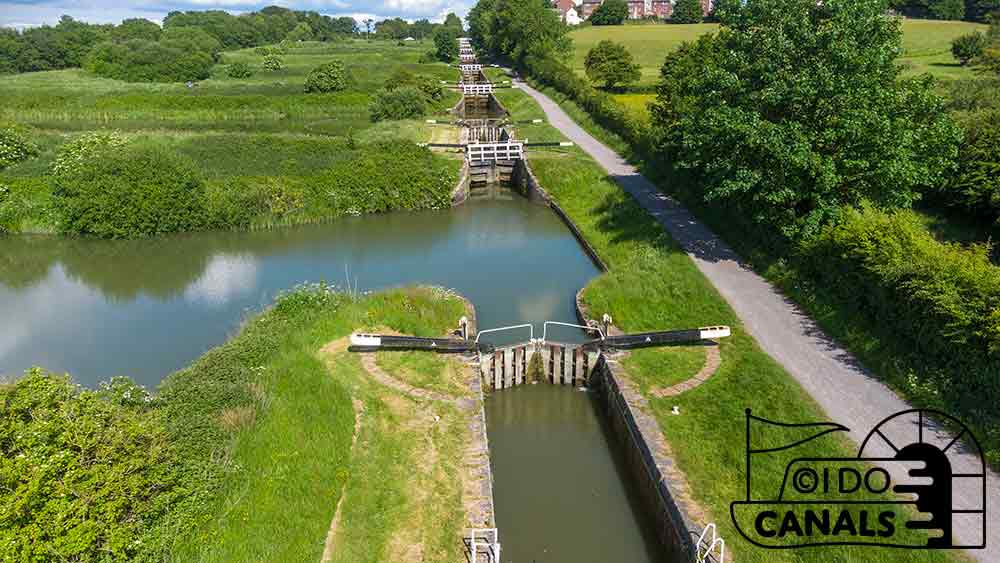
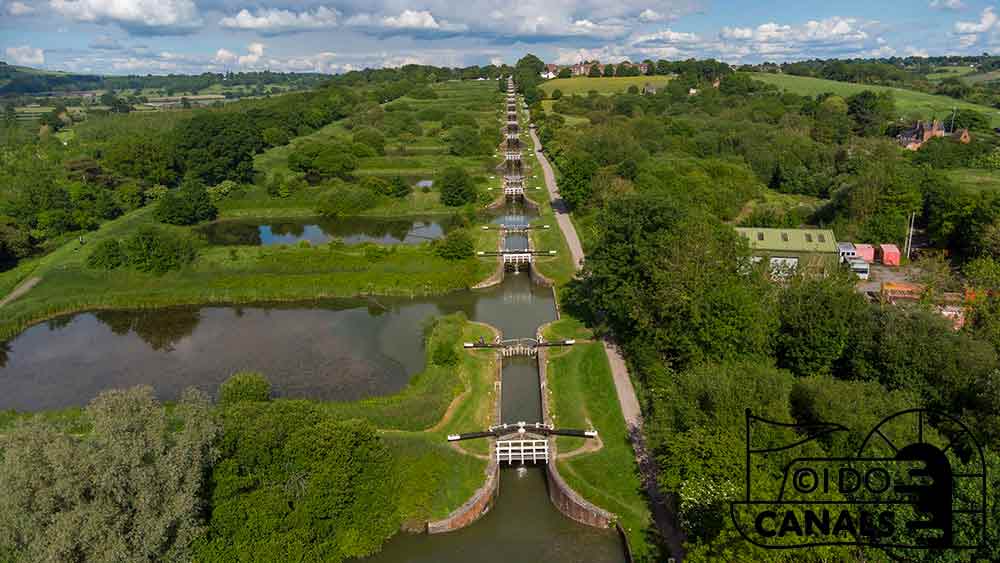
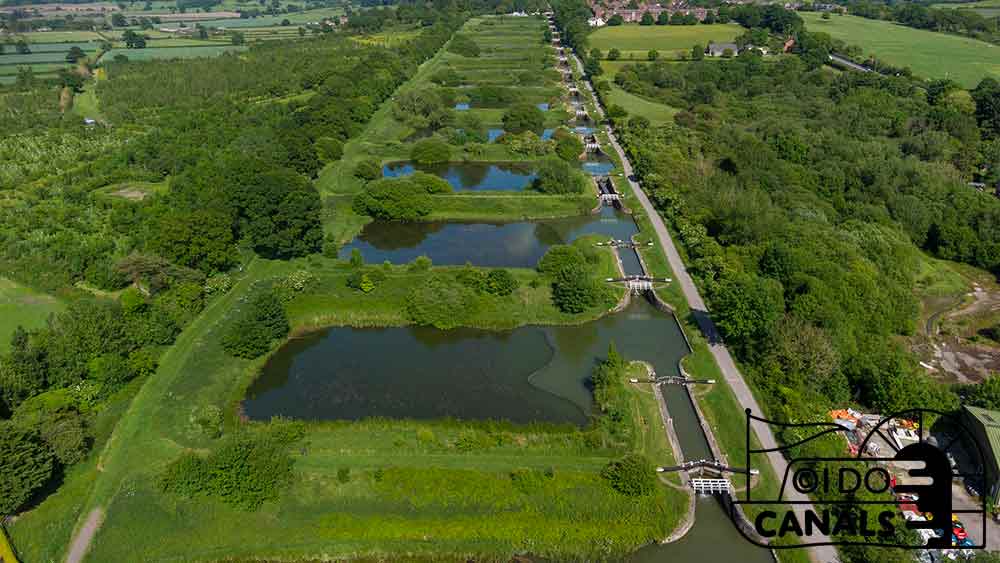
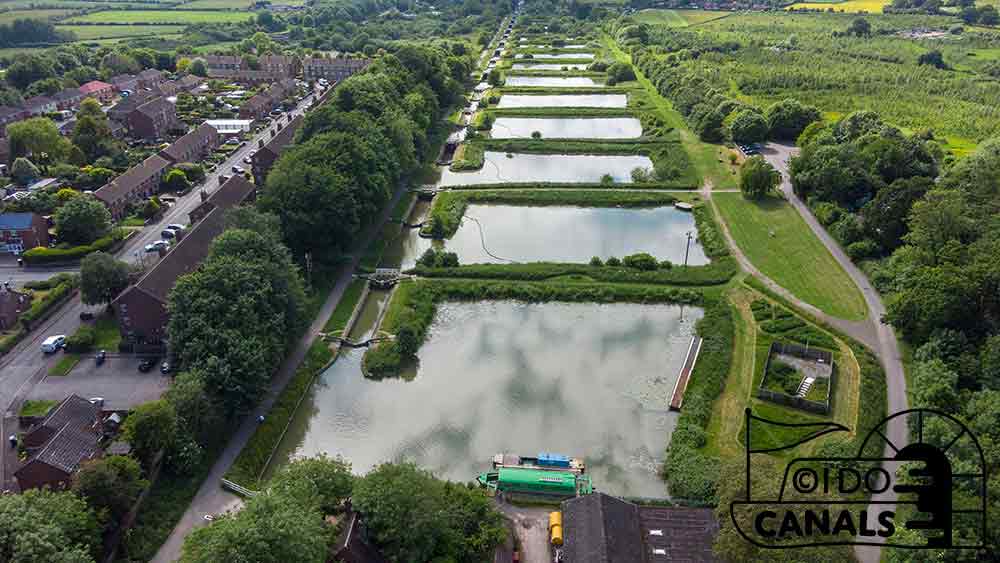
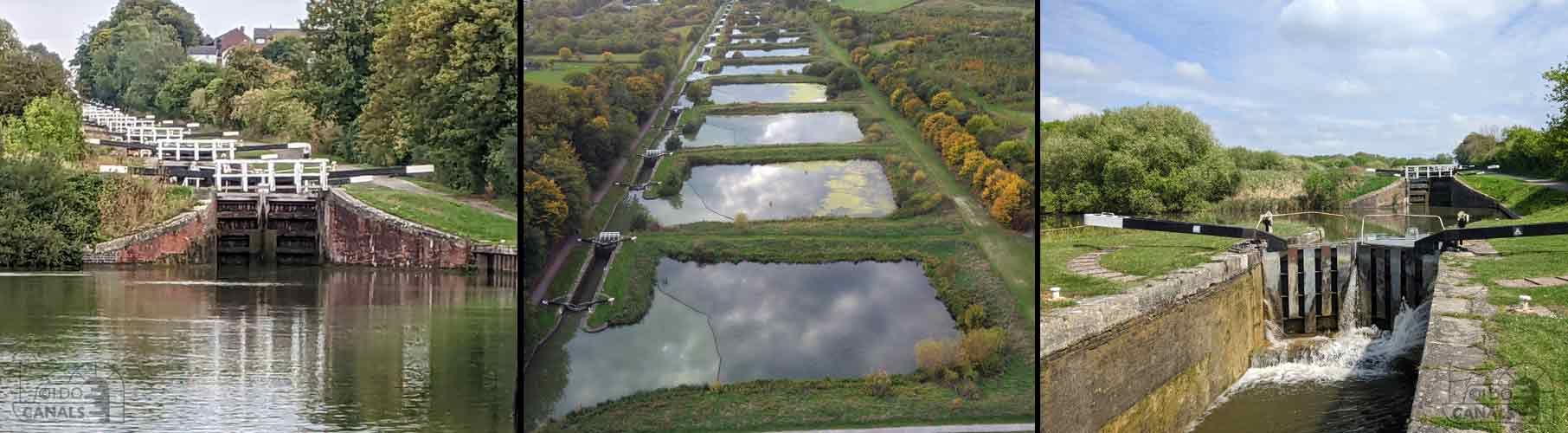
The 29 locks rise of 237 feet in 2 miles. This makes it the steepest flight of locks in Britain. The gradient is a staggering 1 in 44. Navigating all 29 locks (22 to 50) takes an average of 5 to 6 hours in a canal boat. With the locks in your favour and volunteers on hand to assist, it can be done in under five hours.
Caen Hill Locks are one of the most famous and dramatic lock flights on Britain’s inland waterways. Located near Devizes in Wiltshire, they form a central feature of the Kennet and Avon Canal and are widely regarded as one of the greatest achievements of canal engineering in England.
For canal boat users, Caen Hill is both a navigational challenge and a memorable highlight, offering historic significance, impressive scale, and stunning views across the Wiltshire countryside.
The Kennet and Avon Canal was constructed to link the River Thames at Reading with the River Avon at Bristol. The section including Caen Hill was built during the late 18th and early 19th centuries.
Key details:
John Rennie was one of Britain’s most respected civil engineers, also responsible for major bridges, docks, and waterways. At Caen Hill, he was tasked with overcoming a significant change in elevation within a relatively short distance.
During construction, a tramway was built to form a trade link Between 1801 and 1810, this ran from Foxhangers to the top, whilst the locks were built, there still remains some small parts of the tack in the towpath arches of the road bridges over the canal.
Between 1829 and 1843, the flight was lit at night by gas lights.
The location of Caen Hill was dictated by geography rather than convenience. The canal needed to climb the steep escarpment between Devizes and Rowde to maintain a viable route across Wiltshire.
This location was chosen because:
As a result, engineers designed a long series of closely spaced locks rather than a winding contour canal.
The Caen Hill complex consists of 29 locks in total, raising boats approximately 237 feet (72 metres). These locks are arranged in three distinct sections.
The lower section consists of six locks that lift boats from the lower canal level towards Devizes.
This section allows crews to prepare for the more intensive lock work ahead.
The central and most famous part of Caen Hill is the main flight of 16 consecutive locks, numbered 29 to 44.
This design was chosen to conserve water and space. Side ponds were originally used to reduce water loss, although they are no longer operational today.
A back pump was installed at Lower Foxhangers Lock 22 in 1996 which is capable of returning a staggering 7 million imperial gallons of water every day, from Foxhangers to the top of the flight. If you like, this is a whole lock-full of water every eleven minutes!
For canal boat users, this section requires careful planning, teamwork, and time, but rewards crews with exceptional views and a strong sense of achievement.
The upper section consists of six locks that complete the ascent and lead onto the summit level.
Once through the top locks, the canal becomes calmer and more level, offering relief after the demanding climb.
Like much of the Kennet and Avon Canal, Caen Hill fell into disuse during the late 19th and early 20th centuries due to competition from railways and roads.
Key milestones:
The restoration was one of the largest canal engineering projects of its time and played a crucial role in reviving the entire Kennet and Avon Canal.
Today, Caen Hill Locks are a major attraction for:
The locks are fully operational and supported by volunteer lock keepers during busy periods, helping boats ascend and descend safely.
Caen Hill Locks are far more than a series of locks; they are a testament to early 19th-century engineering ambition and skill. Carefully designed by John Rennie and completed in 1810, the locks allowed the Kennet and Avon Canal to overcome a formidable change in elevation. Today, divided into their three distinctive sections, they remain one of the most impressive and rewarding experiences on the British canal network.
Users of the information displayed in this website or in websites linked to directly or indirectly, do so on the basis that it is a guide only. I Do Canals or its directors, partners or associates do not accept any responsibility for inaccuracies, omissions, costs incurred or disappointments of any kind what-so-ever. It is the users responsibility to check directly with any services, displayed, listed or linked to in or from this website, or associated parties with regards to (but not limited to) directions, costs, facilities, services, hospitality, availability, accommodation, etc. There is no implied recommendation for any of the entries or firms listed, nor is any criticism implied for any entry or firm not yet listed.
We have added 111 Waterways and there are 3379 entries listed and displayed on our maps and/or the resource pages:
Waterways Resources -
Boat Build & Fit Out -
Waterside Attractions. We continue to add items on a very regular basis.
Many entries have several services on offer, on average 5 services (some have many more). This means there are approx. 5 x the number of services listed.
Add a Feature or Service to One of Our Website Maps and Lists