
British Canals Through The Years: Navigation 
- Canal History
- Canals Through the Years
 From Romans to Present Day
 - The First WaterwaysAiding in Transportation and Trade
- The BoatsFrom Narrowboats to Widebeams & Cruisers
- The Canal AgeTurning Britain into a Global Industrial Leader
- The Canal EngineersThe British Canal Engineers
- Who Built Them & WhenWhich Engineers & When it Opened
- The DeclineThe Downfall of The Canals
- The RevivalRejuvenation and the Birth of Canal Tourism
- Canals Through the Years
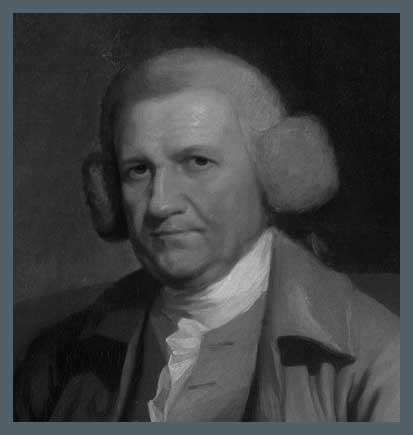
John Smeaton: The English Civil Engineer Who Transformed Modern Engineering
John Smeaton (1724–1792) is widely regarded as one of the most influential early civil engineers in British history. Credited as the first person to call himself a “civil engineer,” he helped define the profession through groundbreaking work on lighthouses, canals, bridges, harbours, mills, and water‑powered machinery. [1](https://en.wikipedia.org/wiki/John_Smeaton)
Early Life and the Making of an Engineer
Born in Austhorpe, near Leeds, Smeaton originally trained as a maker of mathematical and scientific instruments, a background that cultivated his precision, experimental mindset and lifelong commitment to empirical testing. His early career in London led to election as a Fellow of the Royal Society in 1753, marking him as one of the leading scientific thinkers of his generation.
Scientific Foundations
Smeaton’s natural curiosity drove him to study mechanics, air pressure, water movement, and thermal expansion. His research into waterwheel efficiency earned him the Royal Society’s Copley Medal in 1759 and played a role in the development of early industrial machinery.
Engineering Masterpieces and Major Achievements
The Eddystone Lighthouse – His Most Iconic Project
Between 1756 and 1759, Smeaton designed and built the third Eddystone Lighthouse, an engineering triumph that stood for over a century. Constructed from interlocking blocks of stone shaped like the trunk of an oak tree, it introduced techniques that transformed wave-resistant marine construction. The project also led Smeaton to identify and utilise hydraulic lime, a material that hardens underwater and became essential in civil engineering.
Bridges, Harbours, and Canals Across Britain
Smeaton designed more than 30 major civil works, including the Forth & Clyde Canal, Ramsgate Harbour and bridges in Perth, Banff and Coldstream. His canal engineering helped link the Atlantic to the North Sea, providing a major navigation route through Scotland.
Advancing Water and Steam Power
Through years of experimentation, Smeaton improved the efficiency of waterwheels, changes that were widely adopted during the Industrial Revolution. He also enhanced the Newcomen atmospheric steam engine, enabling greater pumping power for mines and industrial sites and helping transition Britain toward more reliable mechanised energy.
Founder of the Civil Engineering Profession
In 1771, Smeaton founded the world’s first engineering society, the Society of Civil Engineers—later renamed the Smeatonian Society of Civil Engineers in his honour. This group established the model for professional engineering bodies that followed, including what eventually became the Institution of Civil Engineers.
A Leader in Engineering Methodology
Smeaton championed the use of rigorous experiment‑based design, careful measurement and methodical reporting. His approach shifted engineering away from rule-of-thumb practices and toward scientific analysis, laying the groundwork for the modern engineering process.
Legacy and Lasting Influence
Recognised by many as the “father of civil engineering,” Smeaton permanently changed the discipline through his innovations in hydraulic construction, his advancement of water power, and his insistence on scientific method. His projects from the enduring stone lighthouse at Eddystone to canals that reshaped regional trade, stand as testaments to his engineering genius.
A Foundation for Future Engineers
Smeaton’s work influenced generations of engineers, including those who later expanded Britain’s canal system and improved maritime infrastructure. His scientific mindset, design principles, and pioneering engineering society remain central to the profession even today.
The Canal and Navigable Waterway Engineers
These engineers played a significant role in the development of the canal system in Britain during the Industrial Revolution. Their innovations helped to transform transportation and infrastructure in the country.


